By Mike Reeves | ComplianceJournal.news
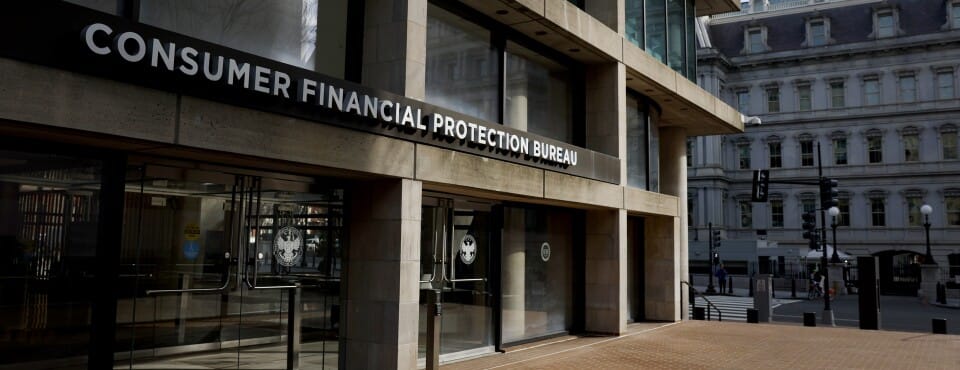
When the Consumer Financial Protection Bureau began cutting its examination and enforcement program in early 2026, the question that followed was predictable: who fills the gap? For debt collection, the answer has arrived faster than the industry expected. State attorneys general, wielding state consumer protection statutes that parallel the FDCPA's prohibitions, have stepped into the enforcement vacuum with notable intensity.
State AGs have always had concurrent authority to enforce the FDCPA under 15 U.S.C. § 1692l(a), which allows them to bring civil actions on behalf of state residents against debt collectors who violate the federal statute. What is new is the scale of state enforcement relative to a retreating federal regulator — and the speed with which multi-state coordination has replaced the CFPB's national examination program as the primary surveillance mechanism for the industry.
New York — The Most Active State Enforcer
New York's Attorney General office has been the most aggressive. The NYAG operates under General Business Law Article 29-H, New York's state debt collection statute, which in several respects goes beyond federal FDCPA prohibitions. The state law applies to original creditors collecting their own debts — a category the federal FDCPA explicitly excludes. That coverage gap has been a consistent enforcement target for the NYAG when the conduct at issue would be FDCPA-compliant solely because the creditor is collecting its own account.
The NYAG has also used its Executive Law § 63(12) authority — which allows the AG to seek injunctive relief and restitution against any person engaging in repeated fraudulent or illegal conduct — to pursue debt collection practices that generate high complaint volume even when technical FDCPA violations are harder to establish.
California — Medical Debt and the Rosenthal Act
California's enforcement focus has centered on medical debt collection. The Rosenthal Fair Debt Collection Practices Act, California's state analog to the FDCPA, applies to original creditors collecting their own debts — making California hospitals, physician groups, and medical billing companies subject to debt collection law obligations that do not exist under federal law.
California's AG has coordinated enforcement with the state's Department of Financial Protection and Innovation on cases involving medical billing practices. The combination of Rosenthal Act coverage, California's medical debt credit reporting restrictions, and the AG's broad consumer protection authority creates a particularly complex compliance environment for healthcare system billing operations in the state.
Multi-State Coalitions — The New National Enforcement Mechanism
The most significant development in state debt collection enforcement is the formation of multi-state enforcement coalitions. When several state AGs coordinate a single investigation against a large debt collection operation, the combined resources and geographic scope create pressure that approaches what the CFPB could generate through its national examination program.
For multi-state debt collection operations, the practical implication is that compliance programs built around CFPB examination priorities need to be reoriented toward state law variation. State law mapping — identifying the specific consumer protection requirements in each state where collection activity occurs — is now a baseline compliance requirement rather than an advanced practice.
This article is for informational purposes and does not constitute legal advice.